IPv4
From $0.50 for 1 pc. 38 countries to choose from, rental period from 7 days.
IPv4
From $0.50 for 1 pc. 38 countries to choose from, rental period from 7 days.
IPv4
From $0.50 for 1 pc. 38 countries to choose from, rental period from 7 days.
IPv6
From $0.07 for 1 pc. 14 countries to choose from, rental period from 7 days.
ISP
From $1.35 for 1 pc. 23 countries to choose from, rental period from 7 days.
Mobile
From $14 for 1 pc. 18 countries to choose from, rental period from 2 days.
Resident
From $0.70 for 1 GB. 200+ countries to choose from, rental period from 30 days.
 Armenia
 Australia
 Belgium
 Brazil
 Bulgaria
 Canada
 China
China
 Czech
Czech
 England
 Finland
 France
 Georgia
 Germany
 Hong Kong
 India
India
 Indonesia
 Italy
Italy
 Japan
Japan
 Kazakhstan
 Korea
Korea
 Latvia
 Lithuania
 Malaysia
 Mexico
 Netherlands
 Poland
 Portugal
 Romania
 Russia
 Singapore
 South Africa
 Spain
Spain
 Sweden
 Switzerland
 Thailand
 Turkey
 Ukraine
 USA
USA
Use cases:
Armenia
Australia
Belgium
Brazil
Bulgaria
Canada
China
Czech
England
Finland
France
Georgia
Germany
Hong Kong
India
Indonesia
Italy
Japan
Kazakhstan
Korea
Latvia
Lithuania
Malaysia
Mexico
Netherlands
Poland
Portugal
Romania
Russia
Singapore
South Africa
Spain
Sweden
Switzerland
Thailand
Turkey
Ukraine
USA
Use cases:
Tools:
Company:
About Us:
Armenia
Australia
Belgium
Brazil
Bulgaria
Canada
China
Czech
England
Finland
France
Georgia
Germany
Hong Kong
India
Indonesia
Italy
Japan
Kazakhstan
Korea
Latvia
Lithuania
Malaysia
Mexico
Netherlands
Poland
Portugal
Romania
Russia
Singapore
South Africa
Spain
Sweden
Switzerland
Thailand
Turkey
Ukraine
USA
Google Ads competitor analysis lets businesses analyze the market landscape, assess strategic plans, and discover potential areas for advancement. Notably, campaign monitoring enables the refinement of advertising techniques to increase click rates as well as the profitability of pay-per-click advertising investments. This article outlines five practical strategies using specialized Google Ads competitor analysis tools, from monitoring advertisements by countries and brands to keyword and landing page dissection.
Google Ads Transparency Center serves as one of the easiest starting points for Google Ads competitor analysis. This tool enables users to access all advertisements associated with a particular brand or domain. By entering a company name or webpage link, users can access all active ones along with their respective launch dates, utilized formats, and targeted regions.
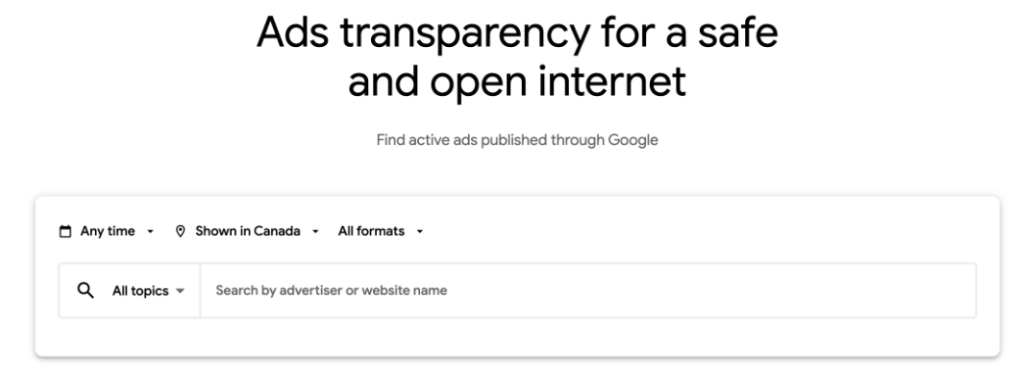
Combining this technique with a standard Google search may yield even further insights. You may type in keywords relevant to your niche and look at which advertisers are listed on the top. This provides an optimal way of: how to check Google Ads competitors of other countries and regions, especially when using geo-location switching tools such as proxy servers.
Important details to remember while using this tool:
This approach does not require any sophisticated tools and gives a preliminary picture of the rival’s advert campaigns.
Specialized Google Ads competitor analysis tools are necessary for conducting an in-depth analysis as they offer comprehensive data on advertisements, keywords, audiences, and placement targeting.
Here’s an evaluation table of four of the most effective tools:
| Tool | Features | Notes |
|---|---|---|
| SEMrush | Keyword analysis, creatives, impression history, advertisement budgets | Ideal for deep work with both PPC and SEO |
| SpyFu | Campaign tracking by domain, auction history, top keywords | Good for evaluating bids and advertisement structures of rivals |
| Adbeat | Creative collection, distribution channels, formats, ad budgets | Especially useful for banner and video ad analysis |
| Similarweb | Traffic source analysis, top pages, active advertisement channels | Gives an overview of overall promotion strategy |
These services not only show you how to check where my competitors are using Google Ads, but also provide insight into evaluating the creatives. For instance:
Using such tools is especially relevant when scaling your campaigns or entering new markets.
When doing a Google Ads competitor analysis, you should remember that other advertisers tend to target brands. Branded search campaigns aim to capture traffic from users who were searching for a particular business or product.
Using SEMrush, SpyFu, or Adbeat, which are the best Google Ads spy tools, you can easily detect such advertisements. For this methodology, these softwares allow you to:
This approach applies to e-commerce, online services, and businesses serving a geographical area. If you find aggressive branded competition, you should consider taking protective measures such as:
Following these strategies will allow you to safeguard your position and simultaneously improve your understanding of the Google Ads target competitors.
Considering international markets, reviewing Google Ads competitor analysis requires taking into account regional differences. Depending on the country, language, and culture, other brands may run completely different campaigns. Understanding their methods calls for employing both technical and analytical approaches.
The first step involves modifying your virtual position. This can be changing your virtual location using proxy servers for Google services, which lets you access Google as a resident of a particular country and manually search for results for specific queries.
In order to organize and structure this information, you must employ specialized software. Let’s use SpyFu and SEMrush as examples. Both allow you to set the country for analysis and see which keywords and advertisements are used in that region. Adbeat lets you filter creatives by country and language and analyze media placement channels. Similarweb displays the traffic share from different countries and helps determine regional priorities.
Localized creatives command special attention: translated texts, tailored unique selling propositions (USPs), or visuals. These elements assist in evaluating the level of commitment other brands have in engaging with local markets.
Keywords are fundamental to every PPC campaign, and landing pages determine the conversion rate as well as the overall performance of the advertising activity. Conducting a complete Google Ads competitor analysis requires looking at the key phrases and the destination pages used by the rivals.
To view competitors keywords using apps such as SEMrush, Ahrefs, Serpstat, and SpyFu can be performed. With these platforms, you can:
After pooling relevant keywords, the next step is to analyze landing pages. This will yield insights into the commercial strategies and UX design used by the other brands. Focus on the following aspects:
| Landing page component | What to analyze |
|---|---|
| Page structure | Logical hierarchy, clear headers, block markup |
| Offer and USP | Clarity of offer, uniqueness of value proposition |
| Trust elements | Reviews, logos of clients/partners, certifications |
| Calls to action (CTA) | Wording, button design, repetition across page |
| Visual design | Color schemes, imagery, alignment with audience style |
With this method, you can go beyond just copying your competitors’ strategies. You can evaluate them, find their strong and weak points, and refine the insights for your own strategy.
Even with advanced tools and methodologies available, such analysis may prove futile due to some common oversights. Such oversights can significantly distort the competitive landscape and trigger misguided advertising strategies.
The tendency to try to reproduce rivals' advertisements verbatim is one of the most common oversights. Copying it in this manner, especially without consideration for the intended audience, seasonality, or funnel stage, is highly unlikely to yield any positive results. What works in one niche or region can completely fail in another.
While tools such as SEMrush, Adbeat, SpyFu, or even Google Ad manager competitor analysis offer an abundance of data, they often miss the mark on providing a holistic view. They focus on external metrics and completely neglect internal business goals, budgets, or test hypotheses. Drawing conclusions from data without thoughtful reflection often results in misguided beliefs.
In the context of launching in new international markets, cultural, linguistic, and behavioral differences need to be taken into account. A USP that packs a punch in Germany can easily fall flat or even baffle audiences in Brazil. Creatives that are non-localized tend to erode trust and negatively impact overall performance.
A number of advertisers commence their work by obtaining a few keywords or a basic list of other brands. They don’t go further to examine the account structures, landing pages, or funnels. This shallow focus does not yield strategic insights.
In order to gain real value from competitive analysis, it is crucial to not only look at what others are doing but also analyze the reasons and objectives behind their actions. Information can only be transformed into strategic advantages after thorough analysis.
These five methods provide a structured understanding of the competition within a niche as well as the advertising activity in that niche. Google Ads competitor analysis is not mere data collection or advertisement spying; it lays the groundwork for developing a robust PPC strategy with minimal risk and precise audience targeting.
Knowing how to see Google Ads of competitors, their geography, advertisement creatives, keywords, landing pages, and geotargeting provides insights into not just the present market but also areas for potential growth. Brand and placement targeting analysis, use of monitoring tools and tracking international activity enable the transformation of fragmented data into a solid strategic foundation.
It is needed to be noted that the preparation of the advertisement accounts is equally important to the tools used in the analysis. Focus on observable metrics as opposed to intuition in assessing rivals. This strategy allows decisions to be made in real-time utilizing verified data, which enhances the quality of paid traffic sourced via Google Ads.
 Instagram
  Facebook
  TikTok
  Telegram
  YouTube
  Twitter
  Tinder
  Reddit
  LinkedIn
  Runescape
  Dofus
Dofus  Metin2
  Silkroad
  Margonem
  Minecraft
  Lineage 2
  WoW
WoW  Lords Mobile
  Travian
  Steam
Steam  Origin
  Google
  ScrapeBox
  Amazon
  Ebay
Ebay  Shopify
  Etsy
Etsy  Netflix
  Spotify
  Twitch
  Browsing